
Well, not so much "frequently asked" as "fending off"! Click to expand & collapse questions & answers.
ABOUT MORAYLIGHT SERVICES
-
Do you do outdoor shoots?
Absolutely. If you have a favourite place, such as a beach, farm or woodland, let's talk!
-
Do you do weddings?
No. However, we do work with a number of individual freelancers whom we trust and whose work we respect.
So, even if we can't be of help, feel free to get in touch and we'll be happy to point you at someone who can.
-
Do you do passport photos?
Yes, although most photo ID including UK passport applications don't require a professional photoshoot.
Locally, these places can help with standard UK passport/ID photos:
- Max Speilmann (inside Tesco, Elgin).
- Post Office, Mid Street, Keith (Photo booth)
- Tesco, Keith (Photo booth)
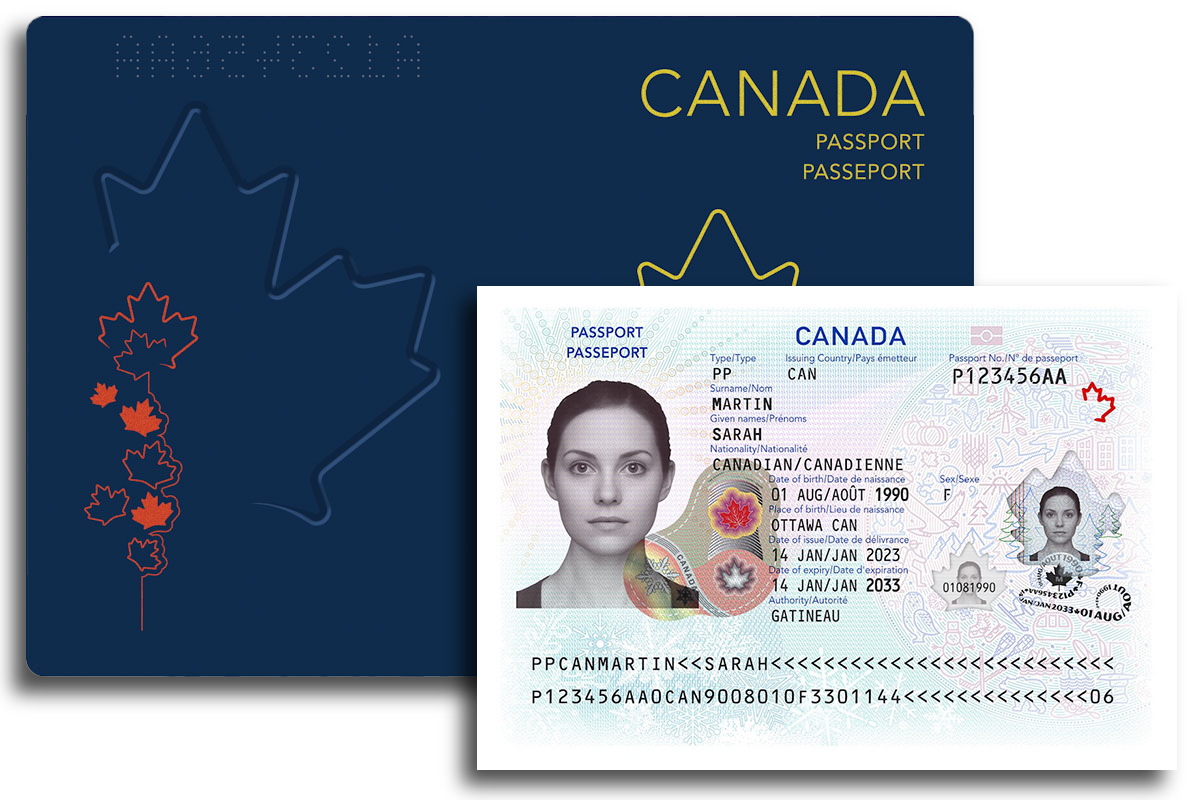
However, if you need photos for a Canadian passport or immigration application, we have experience of this and can help:
When applying for a Canadian passport, your photos must follow strict government standards, to avoid delays or rejection. Each application requires two identical, unaltered photos taken within the last six months.
Unlike UK passport photos, Canadian passport photos must be taken by a professional photographer, and conform to specific lighting, pose, facial expression, dimensions and layout. These requirements apply to both new and renewal applications and failing to meet them can result in rejection and/or delays in your application.
We can provide you with a short (20-30min) studio shoot, to create two 50x70mm colour prints which meet all the specified requirements. Price for this service is £65. In the unlikely event that your photographs are not accepted by Canadian government offices, we will re-shoot at no additional cost to you.
-
Do you do drone photography or video?
No. we're fully focussed on ground-based stills photography. However, we can recommend a licenced drone photography & videography company.
-
But I'm just not photogenic - I hate getting my photo taken?
Let's debunk the myth of you not being photogenic! it's all about capturing your authentic self! Your comfort is the secret ingredient to beautiful images. we're here to support you every step of the way, ensuring you feel at ease and confident.
-
Do you shoot on weekends or evenings?
Yes. We understand that you are living a busy life, hence we always try to accommodate our clients' needs. We will find the date that works for you!
ABOUT THE PHOTOSHOOT
-
Do you shoot pets in the studio?
As long as there's room, then yes, of course! Pets are an integral part of any family and are most welcome.
For multiple or larger dogs, please check first! Larger animals won't fit in our studio - but - a studio shoot can be set up on your premises, if space permits.
-
What should I wear for the shoot?
Select wardrobe choices that reflect your personality and style. Think about colours and textures that make you feel confident. Jot down any questions or specific ideas you have so we can discuss them during our pre-shoot call.
-
What should I NOT wear for the shoot?
Highly reflective or fluorescent fabrics, patches, logos, etc. - these can really spoil the look of your photos.
Fine stripes or fine checked patterns - these play havoc with digital photos (a thing called "Moiré").
Tartan's fine, btw!
-
I have images I want to use for inspiration - can I bring those?
Absolutely! If you have inspo images, such as your favourite artists, celebs or magazine photos that have a particular "look" you'd like to reproduce, email them to us or bring them along to the shoot.
In the studio, we can recreate different styles of lighting and poses, so can work with your inspo images to create something special & unique to you.
-
How long does a headshot shoot last?
It depends on how many people are being photographed: In the studio, we'd recommend at least a 30min session. It can take a bit of time for us all to settle into a relaxed flow and the best shots tend to come after the first 20-30mins of settling in.
Headshot shoots for business organisations tend to be more functional and, once the lighting is set up, Individual sitters can be processed more quickly than would be the case in a personal shoot.
-
How long does a portrait shoot last?
The minimum slot for portrait shoots is 30mins. Again, it take a little time for everyone to settle into a relaxed flow, and the best shots tend to come after the first 20-30min of settling-in.
Typical shoots will be 1hr to 11/2hr, although you can book a longer session if you like. Longer sessions allow for changes of clothes & lighting setups and to create beautiful images without any rush. We won't be paying too much attention to the clock - our focus is on capturing stunning images.
-
Can you photograph my vehicle?
Yes. We can either take your vehicle out to an outdoor location or, if space permits, we can set up a studio-style shoot on your premises. This tractor image was shot in a barn using studio strobe lighting.

ABOUT MY IMAGES
-
I am a personal Client - Can I buy digital images?
Yes & No.
For personal client shoots, our main aim is to create and provide printed products. Any physical wall art products you buy would come with a complimentary JPG of that image, sized at 300dpi for products actually purchased.
(Wall art would include: Mounted paper prints; Framed prints; Framed & unframed photo panels)
-
I am a commercial client - Can I buy digital images?
Yes. For commercial clients there's an expectation that you require the images for publication, websites, marketing, etc.
-
I am a commercial client - What format of images do you supply?
Unless requested otherwise, images are provided via a client gallery in sRGB colour space & JPG format, sized for your required print size at 300ppi (pixels per inch, sometimes referred to as dpi or dots per inch)
-
Can I buy unedited images or camera RAW files?
No. If we were to do this, we would have no control over the quality of the finished product.
Think of the RAW & unedited files as the ingredients that go into creating the final images.
You'd expect a restaurant to only serve you a fully prepared dish - not a bunch of raw ingredients, a half-cooked meal, or other stuff you didn't choose from the menu!
-
Can I buy all of the photographs taken during the shoot?
No. We reserve the right to select which images are suitable, from those taken during the shoot.
Not all photos shot will be usable and we make the final decision as to which images are rejected, which ones meet our required standards, and which ones will be offered for purchase.
-
Who owns the copyright to the photographs you take for me?
Unless otherwise licensed or assigned in writing, copyright is owned by the photographer who took the image. This is the default legal position and is standard within the industry.
-
What about copyright to photographs that you take of my artworks?
This is slightly more complex, as there are two layers of rights to consider:
The Photographer's Right: We, as the photographer, automatically own the copyright to our photograph, even if we do not own the artwork we photographed.
The Underlying Artist's Right: If we photograph a piece of art that is still in copyright (usually 70 years after the artist's death), we generally need the artist's (or their estate's) permission to reproduce that photo commercially.
Put simply: You as the artist own the copyright to your original artwork, and we as the photographer own the copyright to the photograph. Using the photo commercially generally requires agreement and permission from both.
Read more at gov.uk (opens in new tab)
-
Can I buy the copyright to photographs you take for me?
We do not normally sell the copyright to any of our images. If you really need to buy and own copyright, then this would be by written agreement and involve agreeing and paying a "Copyright Buy-Out" fee. This fee will vary, depending on the images and intended usage.
ABOUT PRINTS, PANELS & FRAMES
-
I'm not sure about having prints mounted - what would you suggest?
When framing, whether or not to add a mount (or "mat" in the USA) to your artwork is entirely up to you. Practically, an acid-free mat is a good way to protect the artwork from condensation, and prevent it sticking to the glass.
Personally, I like to view a frame as a border or barrier between the artwork and the surrounding room / environment. A mount then leads the viewer in from this barrier, into and interacting with the artwork itself. If you're going to have one, it's important to choose a mount that will enhance, rather than detract from, the artwork.
A good strategy when choosing a mount colour, is to pick a colour that draws attention to the main subject, or elements, of the artwork. This is ultimately a personal choice but we can offer help with suggestions or recommendations for this.
-
How wide should the mount be?
It's important not to have too narrow a mount, as this can lead to it looking out of place and being more distracting than enhancing.
Mounts should be at least twice the width of the frame moulding.
For images in the range 11x14in to 30x20in, mounts are typically 2in wide.
For smaller images, mounts can be smaller, for example 13/4in or 11/2in wide.
For larger images, 3in to 4in may be appropriate, to retain a sense of good proportions.
These represent average sizes, which give a balanced, classic look. Mounts can be wider - this can give a crisp, modern feel.
-
You print onto metal panels - how does that work?
Printing onto aluminium photo panels uses a process called "Dye Sublimation". There are three separate stages to this:
1. Create a print master
The digital image is re-sized & cropped to fit the area of the chosen panel, based on a print resolution of 300 pixels per inch. The "print master" includes an extra bleed area printed all round, to ensure a borderless print, and fiducial marks to help keep everything aligned during the third (pressing) stage.
2. Create a transfer print
The print master is sent to a Mutoh VJ628 wide-format printer, to create a mirror-image transfer print. This printer is loaded with special "sublimation" inks and paper - more on this in the third (pressing) stage.
3. Transfer the paper print to the aluminium panel
Chromaluxe high definition photo panels comprise a 1.14mm thick aluminium sheet, with a thin polymer layer bonded to one side. It's this polymer layer that accepts the photograpihic image. Blank panels are available with gloss or matte, white or silver finishes. We prefer to use gloss white, as this produces prints with deep blacks, brilliant whites and rich, vibrant colours.
The tranfer print is taped face-down onto the blank panel, then pressed together and 'cooked' under pressure at 180oC for 150s. During the pressing stage, the ink sublimes (changes directly from solid to gas) off the paper and is deposited (directly from gas back to to solid) onto the coated panel.
-
How big can photo panels go?
In our studio, we're limited by the size of our heat press, to printing panels up to 24x20inch. Larger panels are available - we just don't do those in-house, subcontracting them out instead. Depending on the image, max single panel size is 8ftx4ft - same as a sheet of plasterboard.
ABOUT GEAR & STUFF
-
What equipment do you use?
Equipment list - Camera bodies & lenses:
- Nikon D850 (45MP DSLR)
- Nikon D800 (36MP DSLR)
- Wide range of Nikon manual and autofocus lenses
- (Fixed primes & professional zooms)
Equipment list - Lighting:
- (Up to 6) Elinchrom studio strobes
- (Up to 4) Nikon speedlights
- Various modifiers, V-Flats & reflectors
Equipment List - Computer Software:
- Nikon Capture NX Studio
- Adobe Photoshop
- Capture One
- Topaz Photo Ai
- Topaz Gigapixel Ai
- 3DVista Stitcher 4
- 3DVista Virtual Tour
For specialist work such as photo restoration, digital capture, reproduction of original art works, 3D virtual tours, we use a variety of additional equipment:
- Copy stand
- Light box
- Macro stage & various macro lenses
- Polarised light sources
- Geared, 3-way, nodal and gimbal tripod heads
-
How do you control quality through your workflow?
- Dedicated photo editing monitor
- Colour-profiled (calibrated) monitor
- Printer & inks colour-profiled to individual specific papers
- We use only original Canon inks for colour consistency & permanence
- We use only high quality photo & fine art papers
- We use only the industry leading (Chromaluxe) aluminium sublimation panels
-
I have a problem with my camera - can you help?
Moraylight is not a camera sales or repair centre but I'm personally very happy to help with advice, regarding camera problems or something you think may be at fault.
I have a fairly extensive knowledge of photography, including Nikon cameras & lenses going back as far as the 1950s
-
Do you buy or sell camera equipment?
Moraylight doesn't buy and sell camera equipment as such but I'm always on the lookout for collectible Nikon gear. If you have any vintage Nikon bits hiding in a cupboard, I might be interested in buying them for my collection!
If you have any other questions not covered here - ask away!
